Mumbai: As Bollywood prepares for the release of one of its most ambitious films of the decade, Dhurandhar, the spotlight has shifted from its cinematic scale to its spiralling controversies. Directed by Aditya Dhar, celebrated for Uri: The Surgical Strike, the Ranveer Singh–starrer was expected to be a high-voltage comeback vehicle for the actor. Instead, it finds itself entangled in legal battles, cultural storms and fierce online polarization—all before its December 5 release.
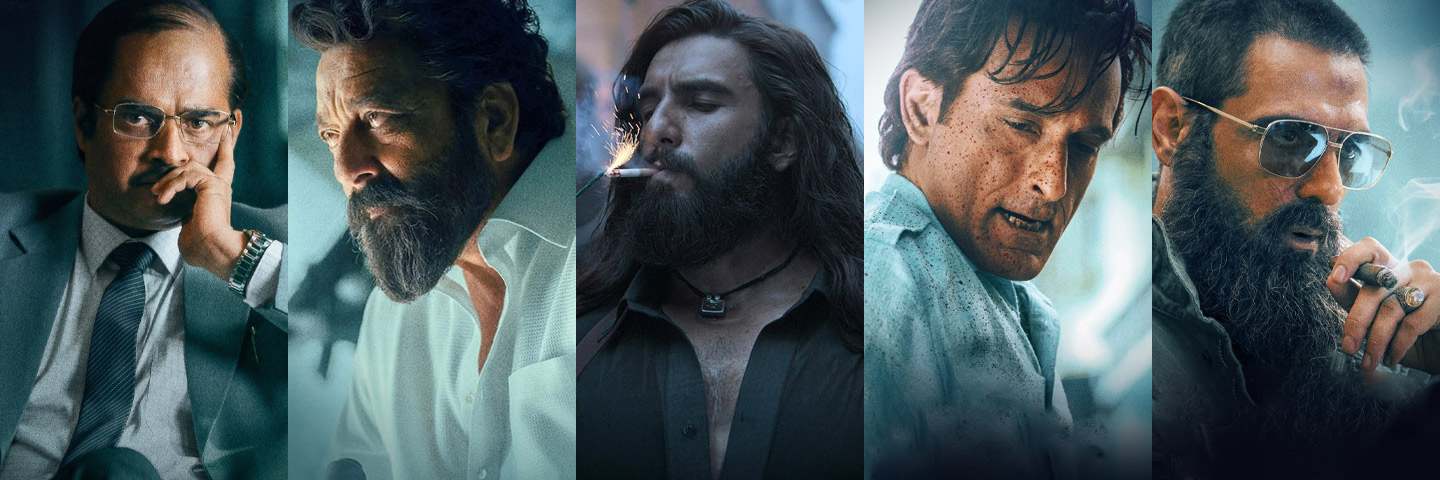
Mounted on a staggering ₹280 crore budget with a runtime of 3 hours 34 minutes, Dhurandhar is the longest Indian feature in 17 years. Its narrative blends elements of cross-border espionage, the 1999 Kandahar hijack, and Karachi’s gangland politics, supported by an ensemble cast featuring Sanjay Dutt, Akshaye Khanna, R. Madhavan, Arjun Rampal, and debutante Sara Ali Khan. Certified ‘A’ by the CBFC after mandated cuts, the film has stirred debates not just over its content but the ethics behind its creative choices.
A Storm Over Real Heroes: The Allegations at the Core
Dhurandhar’s most heated controversy erupted after the family of Major Mohit Sharma, Ashoka Chakra and Sena Medal awardee, filed a petition in the Delhi High Court. They alleged that the film’s material “unmistakably mirrors” the officer’s covert missions and martyrdom—without consent.
Major Sharma, who sacrificed his life in a 2009 Kupwara operation, has long been an emblem of valour. His parents, Sushila and Rajendra Prasad, argued that adapting sensitive aspects of his life without authorization invades family privacy and could jeopardize national security. His brother, Madhur Sharma, emphasized that the family had supported earlier biopic plans, but considered Dhurandhar to be “exploitative.”
Director Aditya Dhar denied the claims categorically, asserting on X that the film is “a work of fiction.” The CBFC, after re-examining the film on court orders and consulting the Indian Army, approved it with modifications—removing violent shots and muting abusive dialogues—yet maintained that no direct link to Major Sharma exists.
Still, damage spread swiftly. Social media fed a polarizing storm, with #BoycottDhurandhar trending amid arguments over nationalism, artistic freedom and Bollywood’s recurring tendency to draw from real-life tragedies.
Another blow came from across the border. Naureen Aslam, widow of famed Karachi police officer Chaudhary Aslam—depicted onscreen by Sanjay Dutt—accused the film of misrepresentation and cultural insensitivity. She objected to phrases in the trailer that she deemed disrespectful and warned of legal action if her husband’s legacy was distorted. The film’s portrayal of Pakistan’s gang wars further intensified geopolitical debates.
Ranveer Singh’s Misstep Adds Fuel
Lead actor Ranveer Singh inadvertently deepened the crisis when he mimicked the sacred Daiva/Bootha Kola ritual from Kantara at the International Film Festival of India (IFFI). His comment describing the deity as a “female ghost” triggered outrage in Karnataka, eventually leading to police complaints alleging hurt religious sentiments.
Though Singh apologized on Instagram, the episode revived old criticisms—his AIB Roast controversy, past cultural appropriation claims, and now the perceived mismatch in casting opposite a much younger Sara Ali Khan. Online communities debated whether Singh’s off-screen persona had become a liability for a film already under intense scrutiny.

Meanwhile, filmmaker Yami Gautam spoke against “toxic paid campaigns” targeting the film, while YouTuber Dhruv Rathee condemned the trailer’s graphic violence, likening it to “ISIS-style brutality.” Pakistani commentators called the film “anti-Pakistan propaganda,” while Indian fans read it as a bold depiction of terror networks.
Violence, Delayed Promotions, and Box Office Woes
At the centre of the promotional difficulties lies Dhurandhar’s excessive gore: beheadings, execution-style killings and gangland brutality. Supporters argue that the film merely mirrors the grim realities of terrorism, while critics accuse it of sensationalizing violence for commercial appeal.
Technical issues have further complicated the rollout. Overseas releases in Australia, New Zealand and Fiji have been delayed. IMAX screenings are reportedly playing non-IMAX formats. Locally, some press shows were pulled back, triggering speculation that producers were intentionally controlling early reactions.
Advance booking numbers—58,801 tickets across 4,016 shows—are modest for a film of this scale. Forecasts suggest a ₹15–20 crore opening, impressive by Ranveer’s recent standards but underwhelming given the massive budget and publicity blitz.
Yet, Dhurandhar enjoys a three-week solo theatrical window, and insiders argue that word-of-mouth could determine whether it becomes a breakout hit or a cautionary tale. Actor Rakesh Bedi has even hinted that Dhurandhar 2 is already in development.
Cinema, Sensitivity, and the Fine Line Between Fact and Fiction
In many ways, Dhurandhar is no longer just a film—it is a cultural moment exposing India’s fault lines over representation, nationalism, religion, and artistic liberty. While legal clearances have paved the way for its release, the broader questions linger:
Should filmmakers borrow from real heroes without explicit consent? Can creative freedom justify emotional distress? And does outrage help or hinder storytelling?
As audiences enter cinemas tomorrow, Dhurandhar stands poised at a crossroads. It may redefine the spy thriller genre—or serve as a stark reminder that in Bollywood, the biggest battles often unfold long before the first show begins.